Discover Better Thin Film Designs.
100x Faster.
Harness modern GPU power to dramatically accelerate your design process and discover higher-performing, more material-efficient designs.
FILMOPTIMA
ADVantages
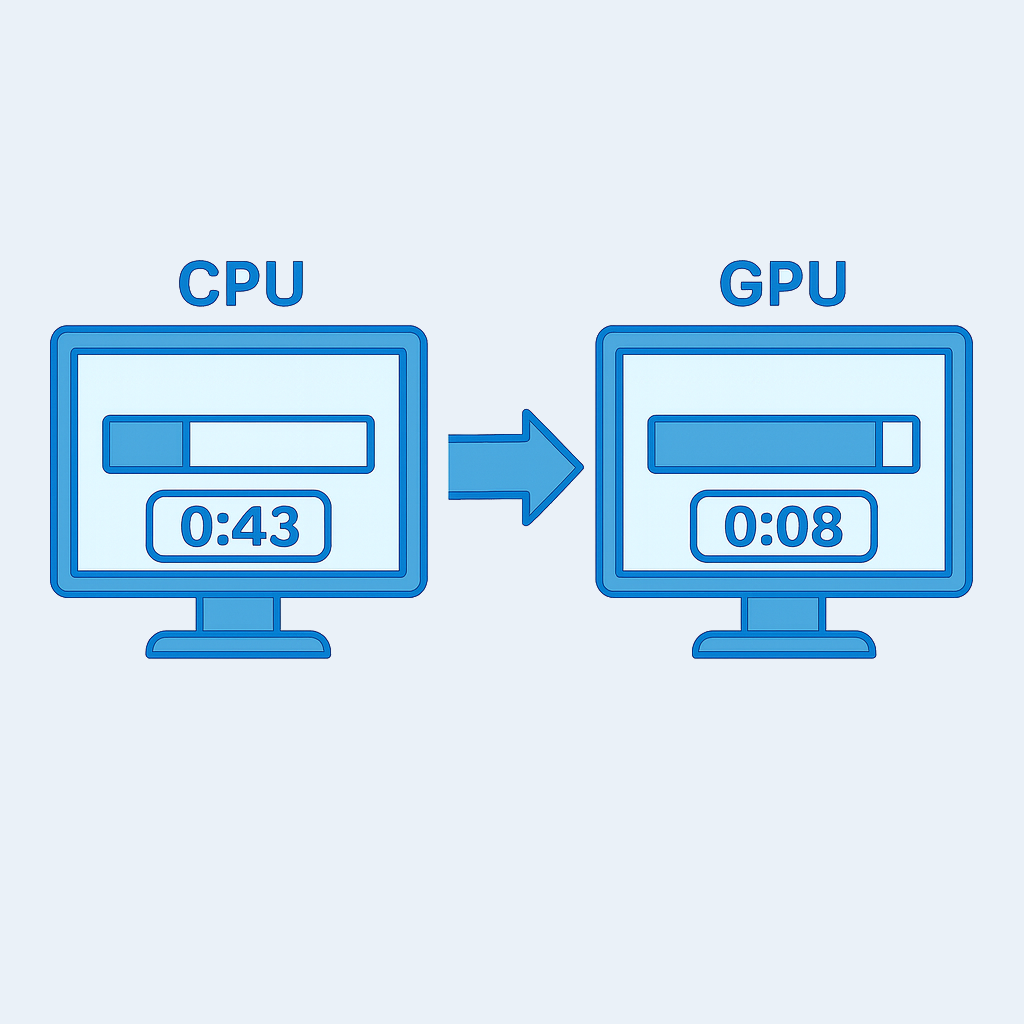
100x
Faster Simulations
Accelerate Design Cycles
FilmOptima harnesses the massive parallel processing power of a modern GPU to cut simulation times from hours to minutes. Perform complex optimization of layer thicknesses in a fraction of the time. Rapidly iterate on designs to achieve target optical properties and accelerate your path from concept to finalized thin film recipe.

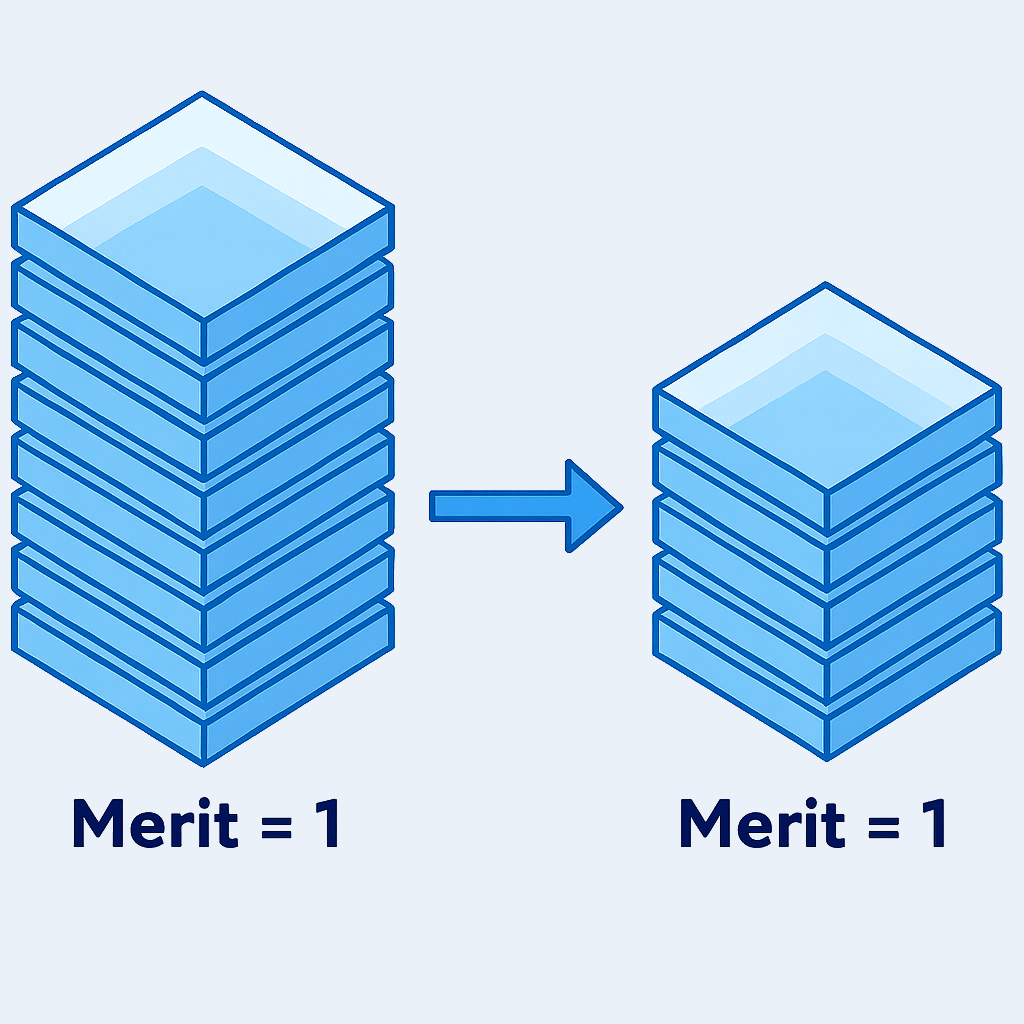
50%
Lower Development Costs
Maximize Engineering Efficiency
FilmOptima delivers automated, user-defined optimization cycles. Engineers can select and queue different algorithms tailored to each design phase. This “set-and-forget” approach allows your top talent to focus on high-value innovation instead of manually babysitting simulations, dramatically improving engineering efficiency and compressing project timelines.

10-50%
Lower Production Cost
Minimize Bill of Materials
FilmOptima enables the discovery of highly efficient designs that achieve target performance with fewer layers and less material than traditional methods. Typical production designs see material reductions of 10-50%, directly slashing coating cost and complexity while maintaining or improving optical performance.

When Optimization Becomes Obstruction
Outdated software is wasting your R&D budget. By failing to leverage modern GPUs, it leaves massive parallel performance untapped and critical design spaces unexplored.
The Real Cost of Inefficient Optimization
Endless, Fruitless Iterations
Burn hours of simulation time only to converge on another unacceptable local minimum.
Wasted Expert Talent
Pay your top engineers and PhDs to babysit simulations instead of solving novel physics problems.
Forced Performance Plateaus
Settle for “good enough” designs because exhaustively exploring the full parameter space is computationally impossible.
Innovation Dictated by Hardware
Let simulation speed, not scientific insight, dictate your project timelines and product release dates.
The Ghost of Better Designs
Constantly wonder if a significantly more efficient, higher-performing design was left undiscovered, just out of computational reach.
Architect a New Workflow with FilmOptima
Achieve Convergence in Minutes, Not Hours
Leverage our native GPU platform to execute massively parallelized optimization routines. Explore parameter spaces 10-100x faster than conventional solvers. What used to take a day now takes a coffee break.
Escape Local Minima with Global Methods
Employ sophisticated algorithms like Branch-and-Bound and Particle Swarm Optimization (PSO) to find globally superior designs, not just locally acceptable ones. Discover performance plateaus you didn’t know existed.
Discover Theoretically Superior Designs
Move beyond the limitations of local solvers. Find novel, high-efficiency designs that traditional methods simply cannot find.
Solve Previously Impossible Problems
Tackle complex, multi-parameter designs and multi-objective optimizations that were once deemed too computationally expensive to even consider.
Automate the Search, Empower the Scientist
Set your target performance and let FilmOptima’s intelligent queue manage the exploration. Reallocate your team’s time from monitoring simulations to deep analysis and fundamental innovation.
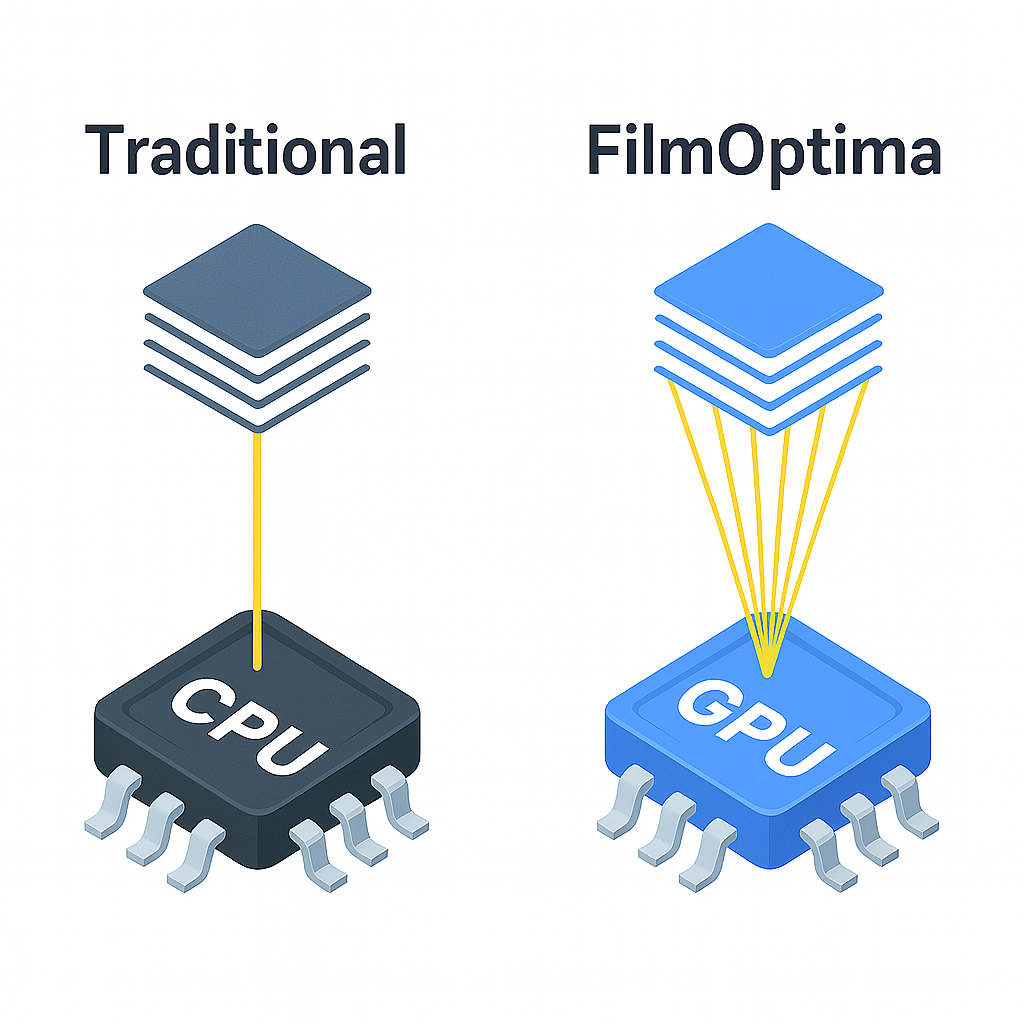
The Only GPU-Accelerated Thin-Film Optimization Tool
FilmOptima combines GPU-accelerated computation, intelligent algorithms, and global optimization to help you design, simulate, and validate superior thin films designs without wasting time or R&D budget.

Unprecedented Speed through Parallel Computation
FilmOptima harnesses the immense parallel processing power of GPU technology – the same engine behind the AI revolution – to dramatically accelerate your thin film simulations
Turn hours into minutes: Run complex simulations at speeds previously impossible.
Explore new possibilities: Discover optimal designs and innovate without compromise.
Focus on what matters: Free your engineers from tedious computations to focus on groundbreaking breakthroughs.
Why Choose FilmOptima?
Slash Development Costs & Time
Rigorous & Accurate Simulation
Material-Efficient Designs
An Intuitive Application for Engineers and Scientists, Not Just Specialists
Accelerate Time-to-Market by Orders of Magnitude
Harness Unprecedented Computational Power
Frequently Asked Questions
Immediately. Most users begin by re-optimizing their existing designs with FilmOptima, which usually results in more material-efficient configurations with fewer layers.
Nope! FilmOptima is designed for engineers, not programmers. Discover your first optimized design within minutes — no coding or GPGPU expertise required.
No, you don’t strictly need a GPU — FilmOptima algorithms can also run on a CPU. However, they are optimized for GPGPU acceleration. Running on a CPU may take hours or even days, so a GPU is strongly recommended.
GPU computing (also called GPGPU — General-Purpose Computing on Graphics Processing Units) uses the massively parallel cores of modern graphics cards for scientific and engineering problems, not just graphics.
Thin-film simulations involve calculations that are highly parallelizable, making them an ideal fit for GPU acceleration. Compared to traditional CPU-based methods, GPUs can deliver up to 100× faster performance, enabling quicker design cycles and more complex optimizations.
Currently NVIDIA GPUs with Compute Capability 8.6, 8.9 and 12.0 are supported (RTX 30/40/50-series, see GPUs). GPUs of other brands (e.g. AMD) are not supported.
All calculations on the GPU are carried out in FP32, the more FP32 TFLOPS, the better.
Performance scales directly with VRAM: more VRAM keeps more of the workload on the GPU, reducing transfers and enabling larger batches, which delivers much faster runtimes.
If budget allows, the best choice today is the RTX 6000 Pro. For a more budget-friendly option, consider the RTX 5090.
Not yet, but it is foreseen.
Windows 10/11 (64-bit)
The basic model for simulation is a stable variant of the Transfer-Matrix Method. All derivatives are calculated analytically, numerical differentiation is not used. Common algorithms like the Needle-Method are available, but also novel ones, which can exploit GPGPU better.
Don’t hesitate
Be the first to experience the future of the industry